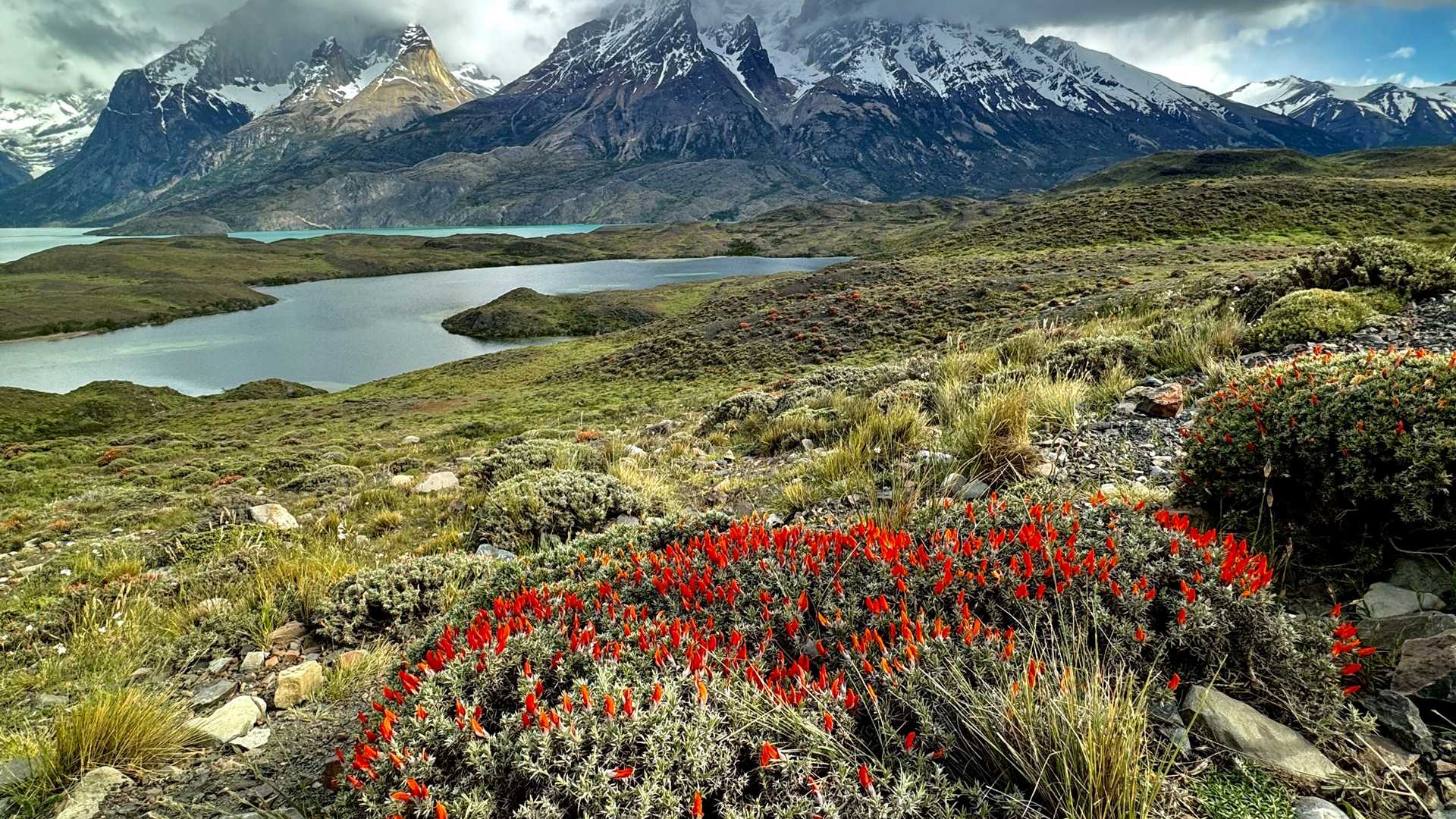
Torres del Paine National Park, Chile, 11/20/2023, National Geographic Resolution
Aboard the
National Geographic Resolution
Antarctica
If we were to have only one day with good weather, this is the one that would have the biggest payoff. Lucky for everyone on board National Geographic Resolution, the dynamic weather of Chilean Patagonia was in our favor, and we had incredible views of the torres (towers) and cuernos (horns) during our visit to Torres del Paine National Park. This is one of the most beautiful and iconic mountain ranges on Earth, and it served as a gorgeous backdrop for the day’s hiking, sightseeing, and dining. To top it all off, some of the guests spotted a puma, the park’s most famous inhabitant.
Justin started working on expedition ships in 2008 after realizing that his new career in scientific illustration meant too much time inside. He has since worked aboard expedition vessels in numerous countries and filmed wildlife for major production...
A day was spent at sea on National Geographic Resolution as the expedition to Patagonia and Antarctica approaches the end with our navigation across the Drake Passage to Ushuaia. It is a time for reflection for all those on board to refresh their memories and to view their photographs of the dramatic landscapes and the diverse wildlife we have witnessed while visiting these special places on our planet. We have been blessed with the weather over the last several weeks and, today, the Drake Passage is in a calm state in terms of swells, less than 2 meters. Several long-finned pilot whales were spotted from the bridge and, so too, five species of petrel and a light-mantled albatross. Fin whales, killer whales, and hourglass dolphins were also spotted. During the day, guests enjoyed a number of presentations, including “Tectonic Accidents-The geology of Antarctica” by Jackie Windh and “The Mighty Krill” by Anne Hedlund. Captain Martin Graser gave a presentation on the design and building of National Geographic Resolution , while our photographic team, led by Alex Joseph and Jennifer Davidson Meadows, compiled guests’ photographs for inclusion in the end of voyage slideshow that is planned for tomorrow evening.
As we entered Paradise Harbor, snow fell gently around us as whales were visible in every direction. Mother and calf minke whales swam especially close to the ship. The smaller calf rolled and splashed playfully before both whales dove beneath us and disappeared into the depths. Morning activities included kayaking and Zodiac cruises on this wintry, serene morning. Zodiacs reported sightings of crabeater, leopard, and fur seals, as well as numerous humpback whales. After a delightful lunch, we landed at the majestic Neko Harbor for our first and final continental landing of the trip before our return voyage to Ushuaia. It was a spectacular conclusion to a marvelous journey, featuring a bustling gentoo penguin colony and breathtaking views from higher elevations. From the landing site, we spotted whales and Weddell seals, all framed by softly falling snow and brash ice adorning the bay.
We woke up early in the morning to witness a spectacular navigation by our bridge team as they took us through the narrow Lemaire Channel, one of the most stunning and iconic passages in Antarctica. This morning Lemaire was full of big icebergs, but that did not stop the National Geographic Resolution ’s captain and his bridge team to safely navigate us through. The channel took us to Argentine Islands where we were able to land and visit Wordie House at Winter Island, a research station established in 1947, situated close to the Ukrainian station Vernadsky. We Zodiac cruised through the narrow channels around the little archipelago, seeing lots of crabeater seals and were also lucky enough to spot a leopard seal chilling on the ice. We cruised by more magnificent ice as we headed towards our next destination. The afternoon was spent at Petermann Island, an island full of Antarctic exploration history, cormorants, and penguins