Deception Island , 2/15/2020, National Geographic Orion
Aboard the
National Geographic Orion
Antarctica
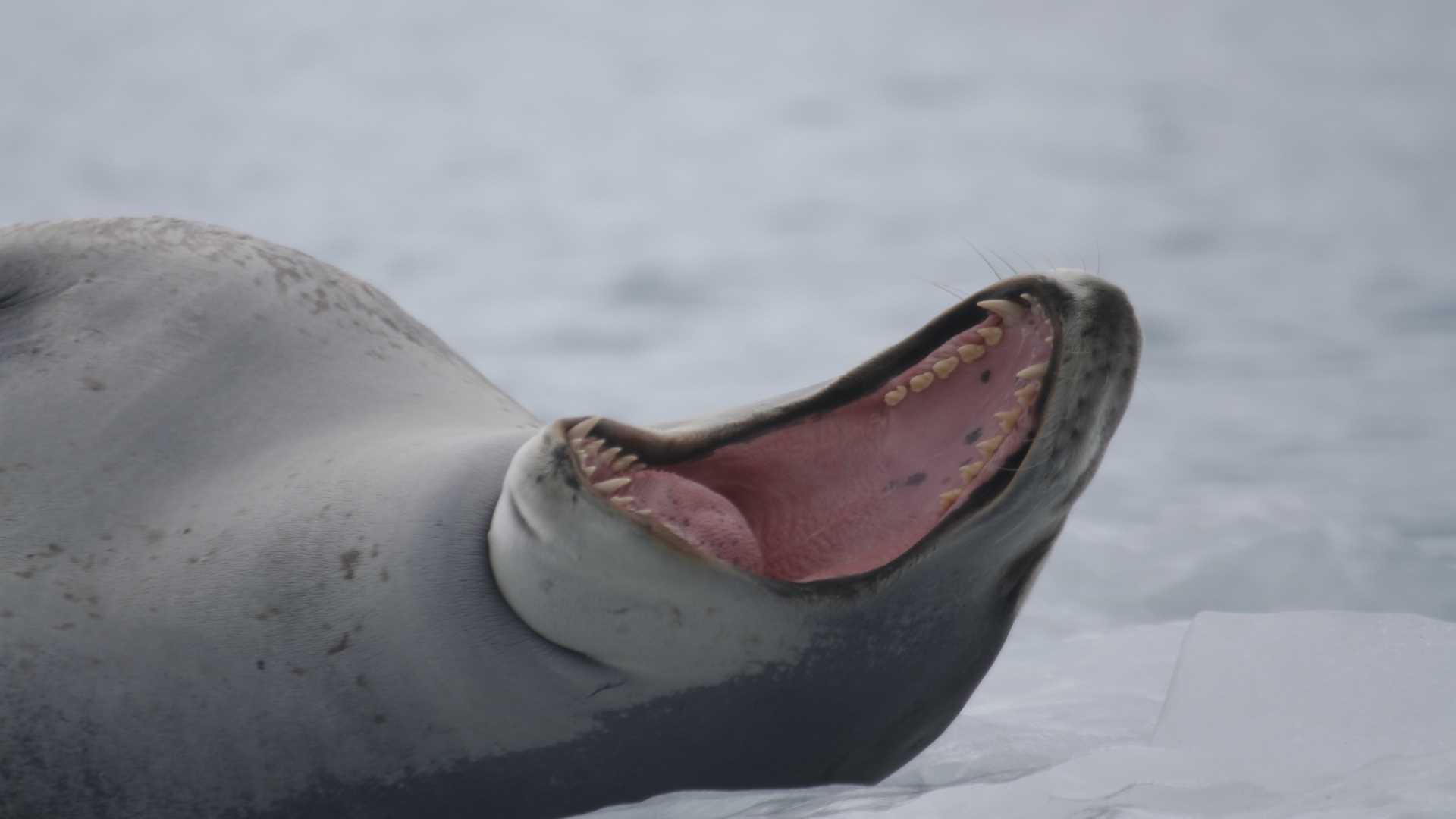
Today we explored a report fjord full of glaciers! Our guests departed in Zodiacs in search of wildlife and wilderness. At the head of the fjord, a large glacier cascading into the sea welcomed us with colors of blue and white. All of a sudden a large section of the glacier broke, cascading to the ocean and sending a large wave. From a safe distance, we watched this incredible event. Later during the Zodiac excursion, we encountered three curious leopard seals. They followed our Zodiacs for some time, and at one point swam right beneath us!
In the afternoon, we visited Deception Island an active volcano that was discovered in the 1820s! Deception Island is home to one of the largest chinstrap penguin colonies. It is most famous for being a 20th century whaling station. Our guests were able to view artifacts of the station that included whalebones, housing and storage facilities, and an old whaling boat.
Josh is a Canadian ecologist who grew up on Vancouver Island British Columbia, Canada. He studied marine biology and ecology with a focus in marine mammals, food web, and community dynamics at the University of Victoria.
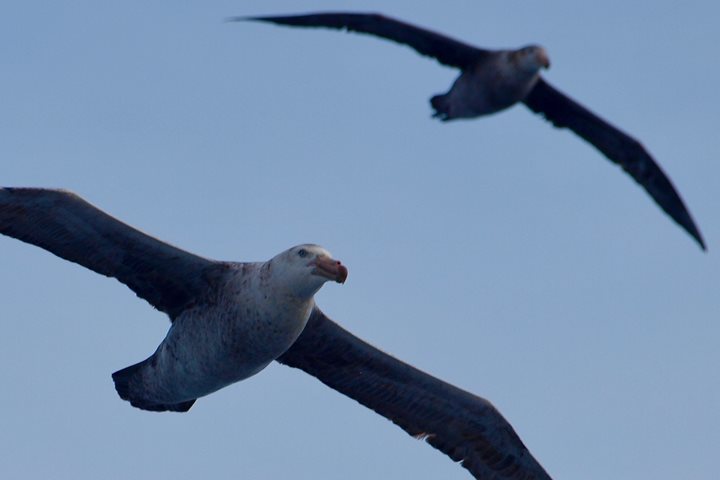
As we approached the end of our expedition, our final full day at sea offered both a full plate of activities on board as well as a chance to reflect on all the experiences of the last ten days. Wind, waves, and wildlife are all important parts of crossing the Drake Passage. We started the morning with ample quantities of the first two, but even with the occasional brace of spray covering the bow and bridge we still made good time with a reasonably comfortable ride on National Geographic Orion . Everyone found their own niche on the ship, writing in journals, editing photos, maybe even getting a head start on packing for the upcoming air travel home. There were a number of presentations also to divert our minds from that latter chore. Conor Ryan presented an informative talk on “The Smell of the Sea” while Jonathan Zaccaria reflected on his own experiences at research stations in “Overwintering in Antarctica.” Later Rob Edwards discussed the data and implications of human influences on global processes in “Welcome to the Anthropocene.” The great wilderness of the Drake Passage eased into a calm and gently rolling sea by late afternoon. We crossed the continental shelf surrounding the southern islands of South America, welcoming many seabirds around the ship, including sooty shearwaters, giant petrels, black-browed albatross, and both giants of the sky: the wandering and the royal albatrosses. As always, there were also full plates of amazing food and the diverse menus that we’ve come to expect during meals. One could only smile at the luxury we’ve been afforded while exploring such a remote place, with the paradox that returning now to the comforts of home with a few extra pounds aboard might mean we need to go back to somewhat more meager rations. However, there is so much more than just the memory of these comforts and cameras full of wildlife photography. One cannot help but feel all the richer for directly experiencing the Antarctic environment as we have, and for the new friends who have shared it with us.
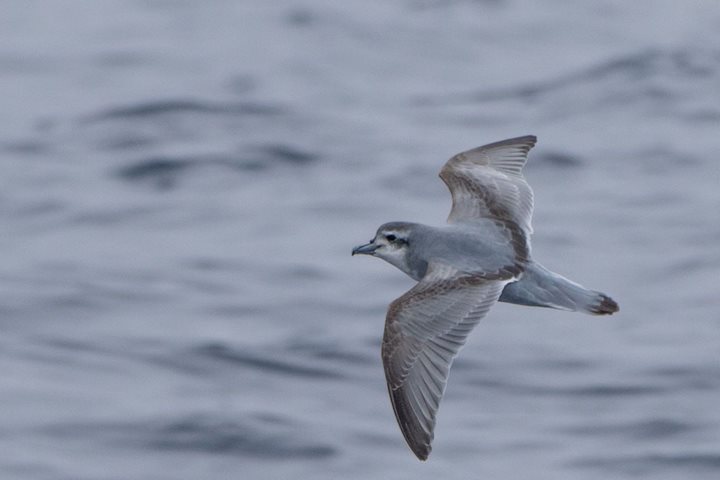
Today we sailed northward at a speed of around 12 knots towards Cape Horn. At 8 a.m., the water temperature was 2.5 °C and by 2 p.m. had risen sharply to the balmy value of 4.2 °C indicating we had crossed the Polar Front, also known as the Antarctic Convergence. Moving away from the ice and into the open ocean brought a suite of seabirds for our pleasure, in particular the members of the tube-nosed seabirds, classified in the order Procellariiformes. Within the order there are four families (albatross, shearwaters, storm petrels, and diving petrels), and today we saw examples from each. Scientific evidence including fossils and genetic analysis indicates that these seabird families developed from a common ancestor with penguins and divers in the mid-Eocene around 40 to 50 million years ago. The smallest are the storm petrels. These are small, flighty birds – some not weighing more than 20 grams – with short wings that allow them to glide and hover on the surface of the ocean where they feed by picking small prey items. They often patter their feet on the water surface. Today we saw Wilson’s and the black-bellied storm petrels. The family of diving petrels has only four species within it, all living in the Southern Hemisphere. We saw the common diving petrel, a small compact bird with rounded wings who flies directly with rapid whirring wings. Diving petrels feed by diving and propel themselves under water with half closed wings. The largest family within the order of tube-nosed seabirds contains the shearwaters and petrels, over 80 species in total ranging from the huge southern giant petrel to the most commonly seen cape petrel, known as the pintado. Its beauty is matched by the Antarctic prion, whose slate grey upperwings are banded with a distinctive darker “M”. Of course, the highlights of the day’s wildlife watching were those majestic ocean wanderers, the albatross. With wingspan over three meters, the Wandering Albatross appears to stay aloft effortlessly. We also sighted some of the smaller species of Albatross including grey headed, light-mantled sooty and black-browed albatross. Watching the seabirds from the bridge of the ship is a great pleasure but not the only entertainment on board. It was a day of engaging presentations offered by the team of naturalists and photographers. Conor Ryan provided an overview of Antarctic whaling history and current practice, Sisse Brimberg shared some of her photographic travels, Caitlyn Webster filled our brains with knowledge of the diving physiology of seals, and Andrew Atkin presented the dramatic story of the race to the South Pole later in the afternoon. At the cocktail hour, expedition leader Peter Wilson previewed the developing weather systems for the remainder of the track up to Cape Horn destined to give us a bit more pitching as we travelled north. After dinner we watched the documentary Chasing Ice . Another great day in the southern hemisphere!
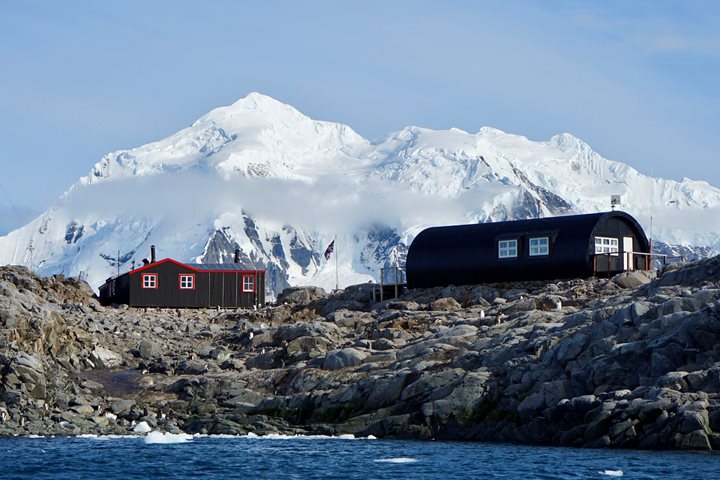
Waking up to blue skies and big smiles, we sail into our last true day down on the white continent. Finding ourselves at the well-known anchorage of Port Lockroy for one last morning of adventures before pulling anchor and head north back into the famous Drake Passage once more.