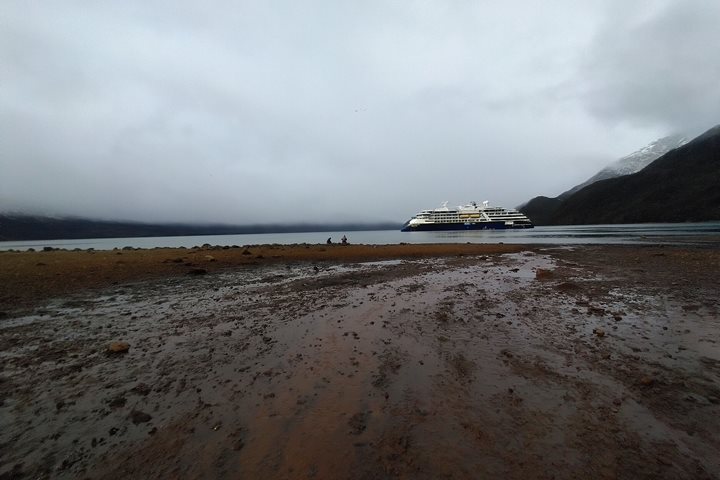
Cape Horn & the Beagle Channel, 11/6/2017, National Geographic Orion
Aboard the
National Geographic Orion
Patagonia
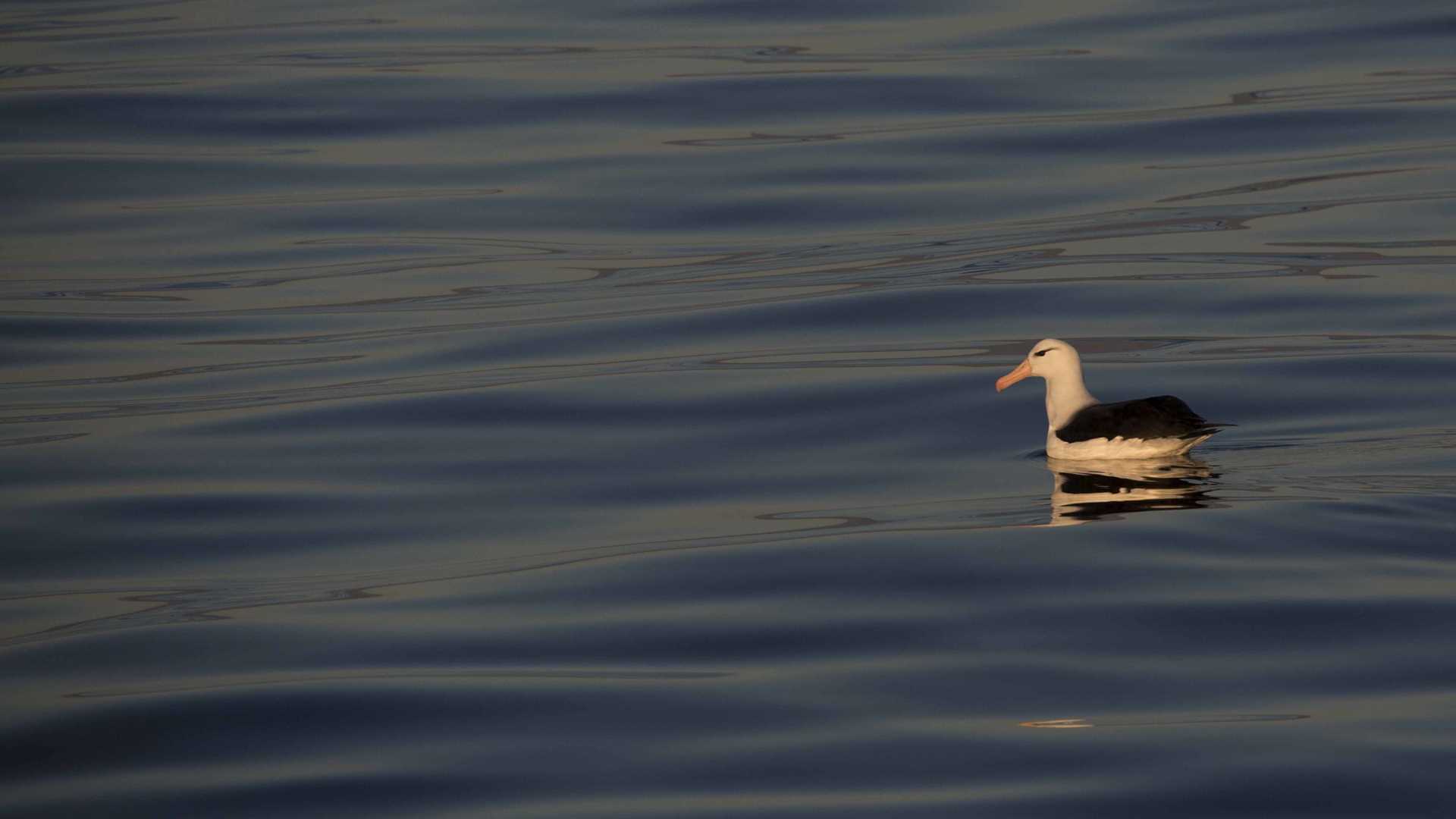
By now we have run out of superlatives to describe the splendor of the Chilean Fjords. Even less words come to mind when thinking about the luck we have had with the weather at these latitudes famed by the horrendous winds that usually prevail. Today we spent an exceptional sunny morning at Cape Horn, hiking to the monument, meeting the Chilean family that lives in the lighthouse, and looking for elusive birds. In the afternoon we experienced glassy calm waters and Sei whales calmly feeding by the ship while sailing the legendary Beagle Channel into Ushuaia.
An ornithologist, photographer, fisherman, climber, and writer, Santiago Imberti was born and raised in southern Patagonia, Argentina. He obtained a degree in tourism and later in ornithology, which allowed him to combine his love for nature and the ...
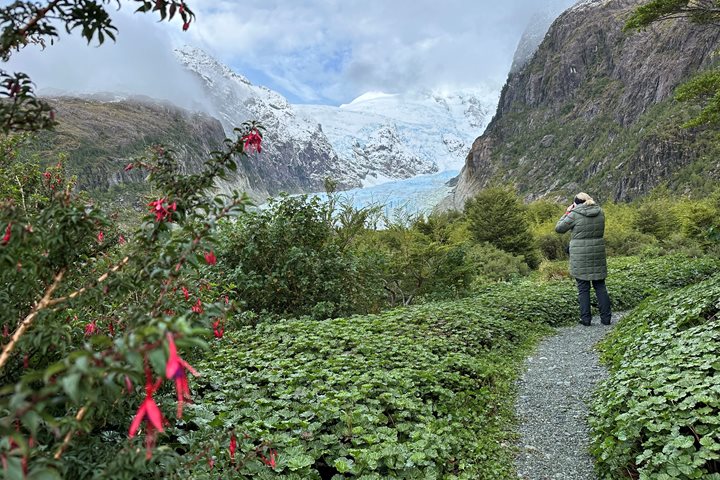
Following a short Zodiac ride to the rocky shore, we hiked toward the Bernal Glacier along a wide gravel path through a wild garden. Tall prickly heath shrubs lined both sides of the path. Laden with both pink and red berries and lantern-shaped white blossoms, these seemed to sprout up through a carpet of the round geranium-like leaves of devil’s strawberry. Further along the path, several bushes of hardy fuchsias were draped in pink and purple flowers. A few minutes spent nearby provided glimpses of flitting green-backed firecrown hummingbirds and the opportunity to closely observe the endangered Bombus dahlbomii, the world’s largest bumblebee. Another half mile down the path, as we neared the face of the Bernal Glacier, a muddle of glacier-tumbled rocks spat out at its base. From this vantage point, the glacier revealed its full height and raw power, its slopes bathed in crystalline hues of blue and white as sunlight danced off its massive surface. After lunch, a few sea lions and pods of Peale’s dolphins entertained us as we awaited a short window of time when the tide was still high enough to allow the captain of National Geographic Resolution to swiftly maneuver through the Kirke Narrows.
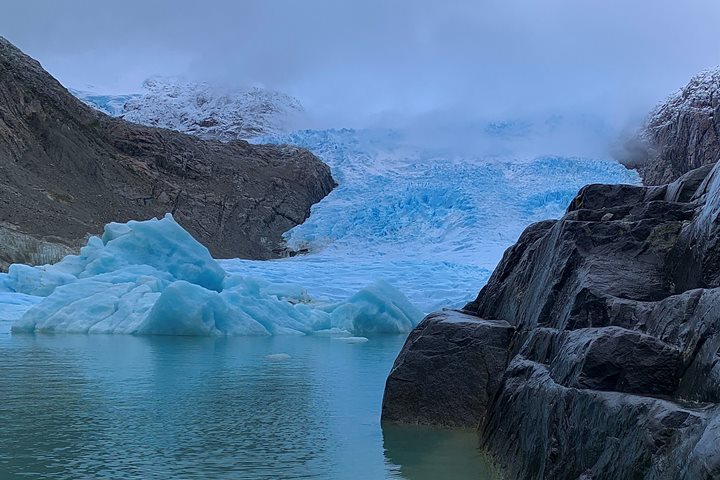
Our explorations today brought us to an area that was new to National Geographic Resolution , Seno Glacier, north of the Straits of Magellan and on the west side of the Ventisquero Ice Field. The winds had calmed through the night, and in typical Patagonian fashion the weather rapidly changed from moist to dry, grey to bright, repeatedly throughout the morning. In other words, excellent for a bit of Zodiac exploration. Our excursion revealed towering cliffs, gravel beaches, and a mysterious sense that something amazing might be around the corner. And indeed, a short ride through a tidal channel opened into a stupendous fjord, with a cracked and eroded glacier tumbling down to the sea, spawning icebergs small and large. Just a few hours later we were cruising in our Zodiacs in a very different landscape, the narrow channels and rocky islets of Bahia Profundo, which are draped in green carpets of the unique Patagonian vegetation rather than ice and glacial debris. The clouds tore away and in streaming sunshine we found our way back to the ship. It is hard to believe we have just one more day of our voyage through this mystical landscape.
Today, we let the mercurial Patagonian weather determine the direction of our adventures. The morning saw us exploring Parry Fjord, once visited by the HMS Beagle in its hydrographic duties in the 18th century. An eerie backdrop of bleached Nothofagus trees (also called southern beeches) framed our expedition. We ambled along a pebbled beach and explored a peat-tinted waterfall. On our return to the ship, we were treated to submarine footage from Staten Island that was collected and presented by our incredible underwater team. After a sumptuous lunch of local grilled delicacies, we took advantage of a good weather window to reach Jackson Bay. Part of Karukinka Natural Park, the bay is home to a colony of elephant seals. A flock of guanacos surprised us as we hiked through the forest to a serene waterfall. Our operation was masterfully timed to take advantage of the changing elements and conditions in these Fuegian regions. A tapestry of sunshine and storms followed us as we continued our endeavor through the fjords.